
Modifying the gut microbiome to treat autism?
In a recent study, researchers transferred the microbiota of non-autistic children to 18 autistic children. What were the results? What do they tell us about the gut-brain axis?


Recap: what is autism?
As a brief reminder, autism is a neuro-developmental disorder that potentially affects communication, social interaction, intellectual ability and behaviour (depending on the case, this can manifest in emotional outbursts, repetitive movements, fear of change...)
It’s estimated that 1 in 160 people worldwide has an autism spectrum disorder.
Study suggests that symptoms of autism may be reduced by microbiota transfer
Digestion-related problems (diarrhoea, bloating, regurgitation, constipation…) were already known to be unusually common in autism, with 75% of autistic individuals experiencing at least one such symptom - an early indication of a potential link between autism and problems in the gut.
Here, we’re looking specifically at the gut microbiota (the collection of microorganisms that colonise the digestive tract) of autistic people.
In a US trial published in 2019, conducted by researchers at Arizona State University, the healthy microbiota of non-autistic children was transferred to 18 children with autism (2). The results were both surprising and encouraging: there was a significant reduction in both gastrointestinal and ASD symptoms in the 18 young recipients.
In fact, by the end of the trial, the treatment had reduced the severity of GI symptoms by around 80% and ASD symptoms by around 24% (3). These improvements were still evident two years later, with a 59% reduction in GI problems, and this time, a reduction of up to 47% in ASD symptoms.
What’s more, the number of children presenting with severe autism problems had fallen from 13 at the start of the study to only 3 by the end of the trial. And 8 were no longer considered to be within the autism spectrum at all following the treatment.
It’s worth noting, however, that faecal microbiota transplants do carry some risks (possible infections, transfer of antibiotic-resistant bacteria…)
The microbiota’s influence on neurological development
Digging a little deeper, we know that bacterial colonisation of the gut begins during prenatal development. The composition of this early microbiota can have a beneficial or adverse effect on the development of the foetus. An unhealthy diet, a microbial infection or metabolic stress may alter the gut flora and thus influence the foetus’ neurological development, potentially leading to lifelong behavioural changes.
Indeed, in a study led by California’s Institute of Technology, the introduction of a viral infection to pregnant mice resulted in the birth of less sociable, more anxious baby mice. These young animals seemed to be missing the bacterial species Bacteroides fragilis. Once these ‘autistic’ mice had been fed this particular bacteria, their digestive and social problems decreased (4).
The gut contains its own nerve cells
All these studies and reflections remind us more generally of the crucial link between the gut and the brain.
Several studies had already focused on this gut-brain axis. For example, researchers had succeeded in changing the behaviour of two groups of mice by swapping their microbiota, resulting in bolder, more daring mice becoming fearful and timid, and vice versa (5).
For its part, the human gut contains 200-500 million nerve cells. It’s a complete nervous system in its own right, referred to as the enteric nervous system. While our brains contain far more of these nerve cells or neurons (90 billion in fact), 200 million is still equivalent to that found in the brain of a cat or small dog. That’s why the gut is often referred to as a ‘second brain’.
How do these 200 million neurons communicate with their counterparts in the brain? In two ways: through transmission of electrical information by the nerves and chemical information by the blood.
For example, 95% of serotonin (a neurotransmitter which regulates certain types of behaviour such as mood and emotional sensitivity) is produced directly in the gut.
Studies have identified an imbalance in the composition of gut microbiota (too many ‘bad’ bacteria compared with ‘good’) in rodents exhibiting depressive behaviour (6). The same is true of humans: in a study involving 37 individuals, researchers observed under-representation of Bacteroidetes and over-representation of the genus Alistipes in the intestines of patients with depression (7).
Probiotics: restoring the balance of gut microbiota to improve mood and behaviour
Probiotics are defined by the WHO as “live microorganisms which, when administered in adequate amounts, confer a beneficial health effect on the host, beyond traditional nutritional effects”. They are widely used today to help rebalance the gut microbiota.
Certain strains are attracting particular scientific interest for their positive effects on the brain, affecting behaviour, mood, emotions... A meta-analysis published in 2016, which reviewed 25 animal studies and 15 human trials (8) highlighted the following microorganisms:
- Bifidobacterius longum (which may reduce symptoms of depression);
- Lactobacillus plantarum (with possible neuroprotective properties);
- Lactobacillus casei (which may increase concentrations of tryptophan and serotonin, producing a noticeable improvement in mood in people prone to depression);
- Lactobacillus brevi (which may be effective against anxiety);
- Lactobacillus salivarius (potentially the most active of them all).
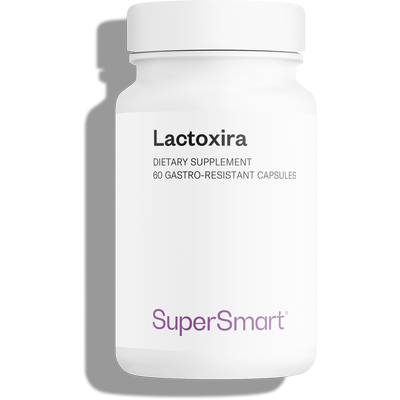
All these microorganisms are combined in certain multi-strain probiotics (such as Lactoxira) which can be taken by those suffering from mood disorders, or who are feeling low or demotivated.
SUPERSMART ADVICE
References
- Horvath K, Perman JA. Autism and gastrointestinal symptoms. Curr Gastroenterol Rep. 2002 Jun;4(3):251-8. doi: 10.1007/s11894-002-0071-6. PMID: 12010627.
- https://news.asu.edu/20221214-discoveries-study-finds-microbiota-transfer-therapy-provides-longterm-improvement-gut
- https://microbiome-foundation.org/la-recherche/projet-autisme-et-microbiote/
- https://www.futura-sciences.com/sante/actualites/biologie-autisme-transfert-microbiote-intestinal-montre-son-efficacite-50780/
- https://www.europe1.fr/sante/les-bacteries-de-notre-intestin-impactent-elles-notre-sante-mentale-2987042
- Dinan TG, Cryan F. Melancholic microbes: a link between gut microbiota and depression ? Neurogastroenterol Motil.2013;25(9): 713–9.
- Jiang H, Ling Z, Zhang Y, et al. Altered fecal microbiota composition in patients with major depressive disorder. Brain Behav Immun. 2015 Apr 13. pii: S0889-1591(15)00110-5. doi: 10.1016/j.bbi.2015.03.016.
- Wang, H., Lee, I. S., Braun, C., & Enck, P. (2016, October). Effect of probiotics on central nervous system functions in animals and humans: A systematic review. Journal of Neurogastroenterology and Motility, 22(4), 589–605. doi:10.5056/jnm16018
Keywords


5 Days
Prodotti eccezionali
Prodotti eccezionali! Consegna rapida e precisa
paola
15 Days
Heldere info
Heldere info
HanS.
16 Days
Snelle levering
Snelle levering
harrie
21 Days
Adequate info en hoge kwaliteit
Adequate info en hoge kwaliteit
HanS.
31 Days
Supplementen zijn goed.
Supplementen zijn goed. Zachte prijzen. Website met problemen ( altijd ) niet goed voor nieuwe klanten.
Gino RJ
40 Days
Alles op tijd geleverd.
Alles op tijd geleverd. De producten worden alsmaar duurder, terwijl mijn pensioen niet meer stijgt. Vandaar kan ik alsmaar minder vaak bestellen.
Wouters
1110 Days
Great service
Great service
Ryszard
1123 Days
Profesjonalna obsługa
Bardzo dobre i rzeczowe opisy. Profesjonalna obsługa.
PIEKOSZEWSKI Chris
1791 Days
Wszystko OK!
Wszystko poszło jak powinno 🙂
SITKIEWICZ Pawel
2578 Days
Szybko sprawnie bez problemów
Szybko sprawnie bez problemów
Marek
of experience
your money back
##montant## purchase